The Maine Coon guide · Kats Kits
Do Maine Coon Cats Shed?
Yes. Maine Coons shed a moderate amount all year, with heavier sheds in spring and fall when the coat changes for the season. For a cat with this much fur, they are surprisingly easy to keep: the coat is silky rather than woolly, and a good brush two or three times a week keeps it free of knots and keeps the hair on your sofa under control.
Below is how much shedding to expect, the routine that works for most Maine Coons, the tools worth buying and how to handle the spots that mat first. It also covers nails, ears, teeth, bathing and whether a summer "lion cut" is a good idea.
Do Maine Coons Shed a Lot?
They shed a moderate amount: more than a short-haired cat, and less than many people expect from the look of them. Day to day you will find some hair on furniture and clothes. Twice a year, in spring and fall, shedding picks up for a few weeks as the cat drops its old undercoat and grows the next one. Spring is usually the heavier of the two, when the thick winter coat comes out.
Indoor cats live with steady heating and electric light, and many shed more evenly through the year as a result. A dull coat that sheds heavily all the time, bald patches or itchy skin are worth mentioning to your vet, since diet and health both show in the coat; see what Maine Coons eat. Shedding is also why Maine Coons are not a good choice for people with cat allergies; see are Maine Coons hypoallergenic.
What Kind of Coat Does a Maine Coon Have?
The Maine Coon coat developed for New England winters, and it is often described as having three layers:
- A soft undercoat of fine, downy hair next to the skin, which keeps the cat warm and is what comes out in the seasonal sheds.
- A middle layer of slightly coarser awn hairs that add bulk.
- Long outer guard hairs that are glossy and fairly water-resistant.
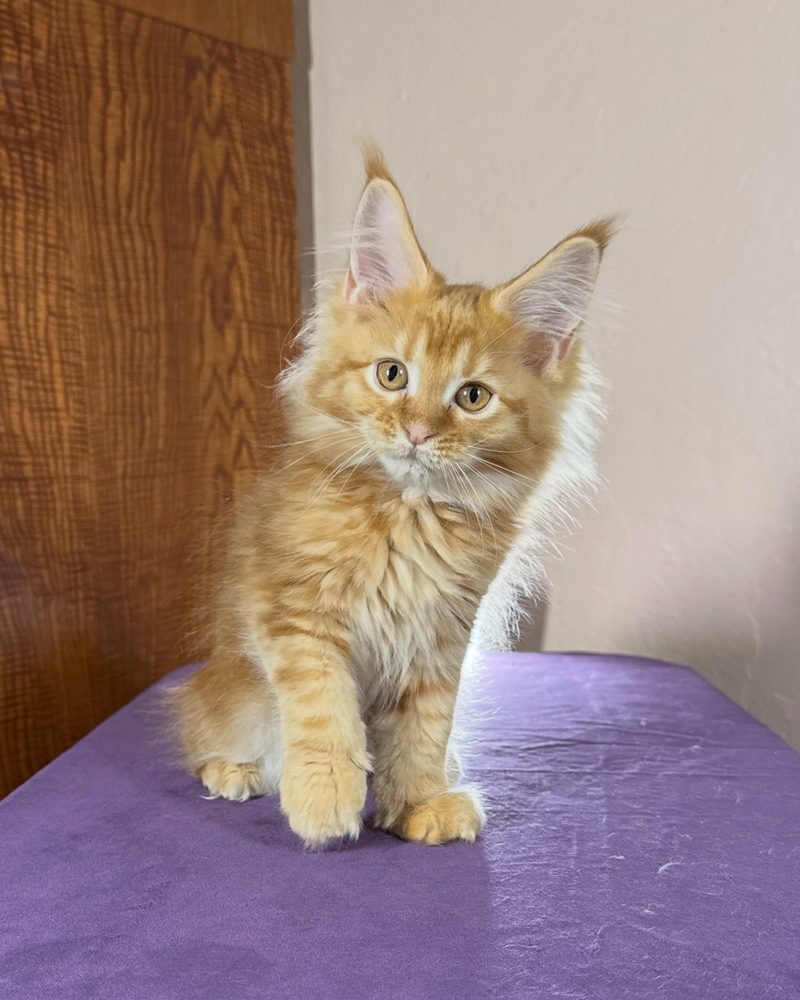
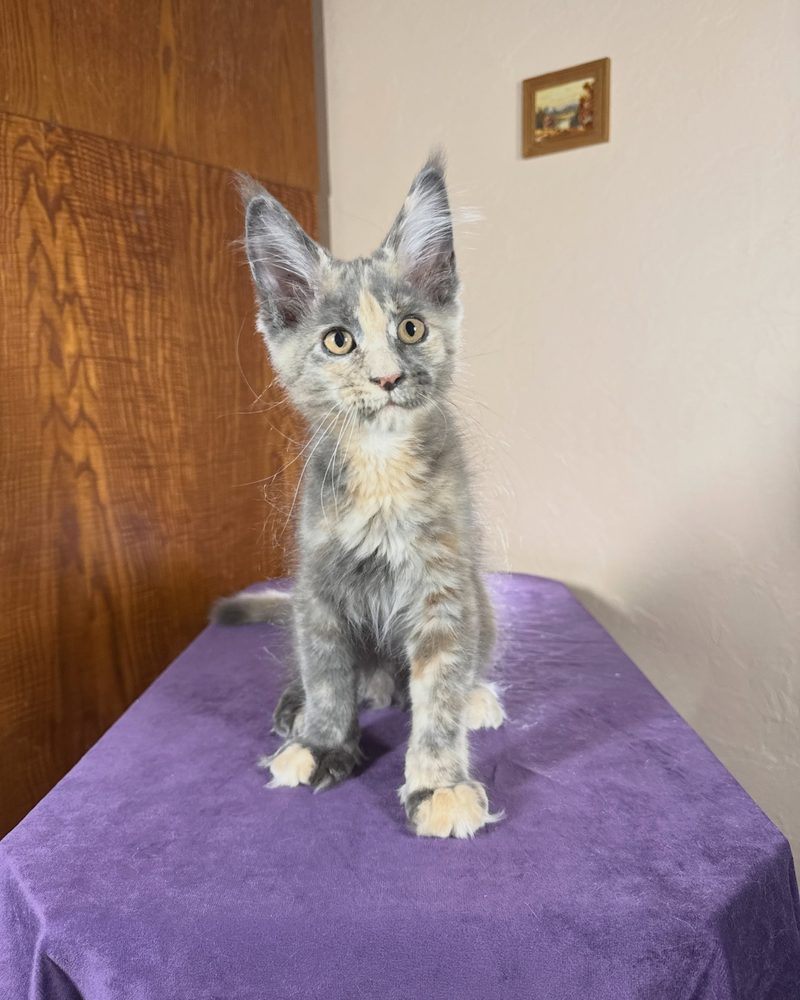
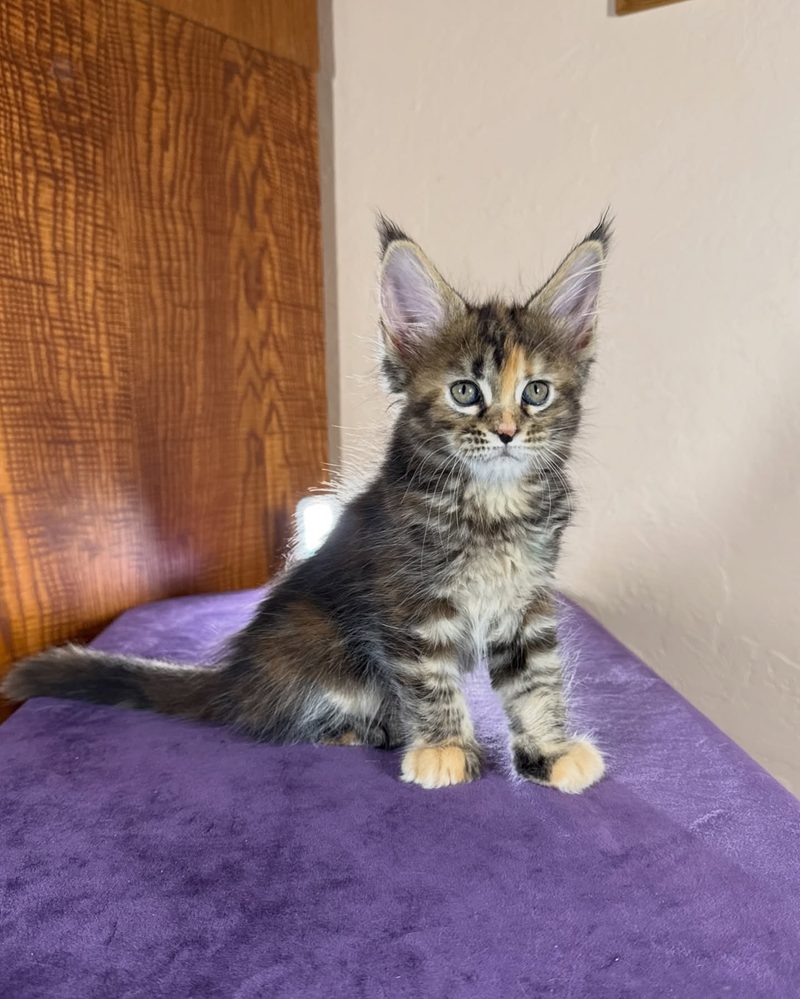
The coat is shaggy and uneven by design: short on the shoulders and head, longer down the back and sides, and longest on the belly, the "britches" at the back of the hind legs, the ruff and the tail. Because the texture is silky rather than cottony, it tangles less readily than a Persian's coat, but the long, soft areas still knot if they are left for weeks. A kitten's coat is shorter and softer, and the full adult coat can take two years or more to come in. More on the breed in what is a Maine Coon cat.
How Do You Groom a Maine Coon?
Two or three short sessions a week suit most Maine Coons, with a quick daily brush during the spring and fall sheds. Five to ten minutes is plenty. You need only a few tools:
- A wide-toothed metal comb for working through the long areas and finding knots before they turn into mats. If you buy one tool, buy this.
- A slicker brush for lifting loose undercoat. Use light strokes, because the fine pins scratch if you press hard.
- A deshedding tool for the heavy seasonal sheds. Use it gently and not every day, since overuse can thin the outer coat and irritate the skin.
- A fine-toothed comb for the face, paws and around the ears.
A simple routine: run the wide comb through the whole coat in the direction the hair grows, section by section. Follow with the slicker brush where the undercoat is loose, then check the problem spots below. Finish with a treat, and stop before your cat has had enough.
Where Do Maine Coons Get Mats?
Mats form where hair rubs or the coat is softest. Check these places every time you groom:
- Belly. The longest, softest hair, and many cats dislike having it handled, so work slowly.
- Britches. The long fur on the back of the hind legs, which can also catch litter.
- Behind the ears. Fine hair here knots quickly and is easy to miss.
- Armpits. The hair rubs every time the cat walks.
- Under the ruff. Especially if your cat wears a collar or harness.
- Base of the tail. Hard for the cat to reach itself.
How Do You Get Mats Out Safely?
Small, loose knots can usually be teased apart. Hold the hair at the base, next to the skin, so you are not pulling on the cat, and work the knot apart with your fingers. Then use the end teeth of the wide comb to pick at the edges, working in a little at a time.
Never cut a mat out with scissors close to the skin. A cat's skin is thin and stretchy, it lifts up into the mat, and it is very easy to cut by accident. A tight mat lying flat against the skin, a large one or several at once is a job for a professional cat groomer or your vet, who can clip it out safely and may sedate a cat that will not keep still. Mats pull on the skin and can hide sores underneath, so do not leave them to grow out.
How Often Should You Bathe a Maine Coon?
Rarely. Most Maine Coons keep themselves clean, and brushing does the rest. A bath is worth it when the coat has turned greasy, the britches are soiled, or the cat has got into something it should not lick off. If you do bathe:
- Comb out every knot first, because water tightens mats.
- Use a shampoo made for cats. Shampoos for people or dogs are not suitable.
- Use lukewarm water in a sink or tub with a rubber mat for grip, and keep water away from the face and ears.
- Wet the coat thoroughly. The water-resistant outer coat takes a while to soak through.
- Rinse until the water runs clear, since leftover shampoo irritates the skin.
- Towel dry well, and use a hair dryer on a low, cool setting only if your cat accepts it. Keep the cat in a warm room until fully dry.
How Do You Care for a Maine Coon's Nails, Ears and Teeth?
Nails. Trim them every two to three weeks with cat nail clippers. Press gently on the pad to extend the claw and cut only the clear or white tip, well short of the pink quick, which bleeds if cut. Your vet or groomer will show you how if you are unsure. Polydactyl Maine Coons have extra toes, and the extra claws, especially on the thumb-like toe, do not always wear down on a scratching post. Check them at every trim so none curls around into the pad. More on polydactyl Maine Coons. Kats Kits kittens are not to be declawed without the breeder's approval; regular trims, a good scratching post and, if needed, nail caps are the alternatives.
Ears. Look inside once a week. The long hair inside a Maine Coon's ears, called ear furnishings, is normal. Wipe visible dirt from the outer ear with a cotton pad and a vet-approved ear cleaner, and never push a cotton swab into the ear canal. Dark, crumbly debris, a smell, redness or head shaking need a vet visit.
Teeth. Gum disease is common in adult cats. Brushing with a cat toothpaste, never human toothpaste, is the best home care. Start with a finger and a dab of paste and build up slowly, and have your vet check the teeth at each yearly visit.
How Do You Prevent Hairballs in a Maine Coon?
Long-haired cats swallow a lot of hair when they groom, and Maine Coons can bring up the odd hairball, more often during the seasonal sheds. Brushing is the best prevention: every hair in the comb is one the cat does not swallow. Some owners also use a hairball-control food or a hairball remedy; ask your vet which suits your cat.
An occasional hairball is normal. Retching that brings nothing up, repeated vomiting, constipation, a swollen belly or loss of appetite are not, and need a vet promptly, because a hairball can occasionally block the gut.
Should You Shave a Maine Coon?
A body clip often called a "lion cut" leaves the head, legs and tail fluffy and the body short. It has pros and cons:
- For: it clears widespread matting in one go, cuts shedding for a while, and can help an older or overweight cat that can no longer groom its back end.
- Against: many cats find clipping stressful and some need sedation; cat skin is easy to nick; the coat can take months to grow back and sometimes returns a different texture; and because the coat also protects the skin and helps with temperature control, a shaved cat is not necessarily cooler in summer.
For a healthy Maine Coon that is brushed regularly, a lion cut is rarely needed. If you are considering one, have it done by an experienced cat groomer or your vet, not with clippers at home.
When Should You Start Grooming a Maine Coon Kitten?
As soon as your kitten has settled in. The coat is still short and easy to manage, which makes this the best time to teach a kitten that grooming is pleasant:
- Pick a quiet moment, ideally after play when the kitten is calm.
- Handle the paws, ears, mouth and belly a little every day, with a treat afterward.
- Use the wide comb or a soft brush for a minute or two, then stop while the kitten is still enjoying it.
- Trim one or two claws at a time to start with.
A kitten that learns early grows into an adult that sits still for its brush, which matters in a cat this size. See our available Maine Coon kittens, and read about Maine Coon personality for what they are like to live with.
Quick Answers
Do Maine Coons shed more than other cats?
More than most short-haired cats, but not dramatically more than other long-haired breeds. Expect a moderate amount all year and heavier sheds in spring and fall.
How often should I brush my Maine Coon?
Two or three times a week, and daily during the spring and fall sheds.
What is the best brush for a Maine Coon?
A wide-toothed metal comb does most of the work, with a slicker brush for loose undercoat. A deshedding tool helps during heavy sheds if used gently.
Do Maine Coons need professional grooming?
Most do not if they are brushed at home. A groomer is useful for tight mats, a lion cut, or an older cat that struggles to groom itself.
Is it normal for a Maine Coon to shed in winter?
Some shedding all year is normal, especially for indoor cats in heated homes. Sudden heavy shedding, bald patches or itchy skin are worth a vet visit.
Do Maine Coon kittens shed?
Yes, but less than adults, because their coat is shorter. The shedding increases as the adult coat comes in.